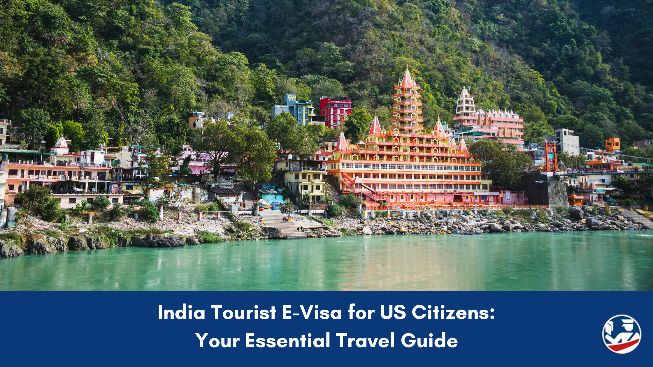
Quick answer: U.S. citizens need a valid visa before traveling to India. For tourism, most travelers can apply online for a 30-day, 1-year, or 5-year e-Tourist Visa.
Do not travel until your Electronic Travel Authorization shows a status of GRANTED. Print the approval and carry it with the U.S. passport used for the application.
Your passport must have at least 6 months of validity remaining from your arrival date and at least 2 blank pages. An e-Tourist Visa cannot be used to enter India by land.
Need Help With Your Application?
iVisa guides you through the form, reviews your application and uploaded documents, and submits the application to the Indian authorities.
Our role: U.S. Passport Service Guide is not a government agency. We explain the requirements and show you how to apply directly or use a paid service. We may earn a commission from sponsored links.
On This Page
- India e-Visa requirements at a glance
- Which tourist e-Visa should you choose?
- Rules to double-check before applying
- How to apply for an India e-Tourist Visa
- What happens when you arrive in India
- When an e-Tourist Visa is not the right document
- Frequently asked questions
India E-Visa Requirements at a Glance
| Requirement | What U.S. Travelers Need |
|---|---|
| Tourist visa | An approved e-Tourist Visa before departure. U.S. citizens do not receive an instant tourist visa at the airport without applying first. |
| Visa options | 30-day, 1-year, or 5-year e-Tourist Visa. |
| Government fee | $10 or $25 for the 30-day visa, $40 for the 1-year visa, or $160 for the 5-year visa. A 3% bank charge is added. |
| Passport validity | Your U.S. passport must be valid for at least 6 months from the date you arrive in India. |
| Blank passport pages | At least 2 blank pages for immigration stamps. |
| Printed approval | Print the ETA after the status shows GRANTED and carry it during travel. |
| Arrival form | Complete the free e-Arrival Card online within 72 hours before arriving in India. |
| Children | Every traveler needs an individual passport and separate e-Visa application, including infants and children. |
| Entry points | Enter through an airport or seaport approved for e-Visa travel. An e-Tourist Visa is not valid for entry by land. |
| Return or onward travel | Carry a return ticket or proof of onward travel and be prepared to show that you can support the trip. |
Which India Tourist E-Visa Should You Choose?
| Visa | Fee | Entries and Stay | Best Fit |
|---|---|---|---|
| 30-Day | $10 from April through June; $25 from July through March | Double entry. Valid for 30 days from the first arrival in India. | One short trip lasting no more than 30 days. |
| 1-Year | $40 | Multiple entry. Valid for 365 days from the ETA grant date. Total time in India cannot exceed 180 days in one calendar year. | A trip longer than 30 days or more than one visit during the next year. |
| 5-Year | $160 for U.S. passport holders | Multiple entry. Valid for 5 years from the ETA grant date. Total time in India cannot exceed 180 days in one calendar year. | Travelers who expect to return to India several times. |
Government fees are non-refundable, whether the ETA is granted or refused. The current country-specific fee schedule also adds a 3% bank charge.
Check the five-year fee carefully: Some Indian consular pages still display the older $80 fee. The current country-specific e-Tourist Visa fee schedule lists $160 for U.S. passport holders. Confirm the amount shown in the official application before paying.
Before You Apply, Double-Check These Rules
- The 30-day visa is valid for 30 days from your first arrival, not for 30 days from the date you submit the application.
- A 1-year or 5-year visa does not permit a continuous stay for that entire period. U.S. travelers are limited to 180 days in India during one calendar year.
- The e-Arrival Card is a separate arrival form. It does not replace the e-Visa.
- An e-Tourist Visa is not valid for entry across a land border.
- Each child needs an individual passport and separate application.
- If you receive a new passport after the ETA is granted, carry both the new passport and the old passport linked to the ETA.
- When applying directly, use the official government website ending in gov.in. iVisa is a private paid application service.
How to Apply for an India E-Tourist Visa
Applying directly through India Immigration avoids a service fee. You complete the form, prepare the uploads, and monitor the application yourself. iVisa guides you through the form, reviews the application and documents, and submits it to the Indian authorities.
What to Prepare
- Passport information page: A clear PDF file between 10 KB and 300 KB.
- Digital photograph: A square JPEG file between 10 KB and 1 MB. Use a plain white background, face the camera directly, keep your eyes open, and remove eyeglasses.
- Travel information: Your expected arrival date, approved port of entry, lodging or host address, and return or onward itinerary.
- Personal information: Your current address, occupation, travel history, and the other background information requested on the form.
- Payment card: A credit or debit card for the non-refundable government fee and bank charge when applying directly.
Application Steps
- Choose the visa duration. Select the 30-day, 1-year, or 5-year e-Tourist Visa based on your trip and expected future travel.
- Complete the application. Enter your personal, passport, and travel information. Save the application ID before leaving the form.
- Upload the passport page and photograph. Make sure both files meet the required format and size and are clear enough to read.
- Review and pay. Check every passport number, date, and spelling before paying the government fee.
- Wait for the GRANTED status. Check the official e-Visa portal and your email. Print the ETA after it is approved.
- Complete the e-Arrival Card. Submit the free arrival form online within 72 hours before arriving in India.
Check These Details Before You Submit
- Your full name, date of birth, passport number, and expiration date match the passport exactly.
- You selected the correct 30-day, 1-year, or 5-year visa.
- Your passport will have at least 6 months of validity remaining when you arrive.
- Your passport has at least 2 blank pages.
- Your photograph is square, clear, taken against a white background, and shows you without eyeglasses.
- Your planned entry point accepts e-Visas.
- You submitted a separate application for every traveler.
- You saved the application ID.
When to apply: India requires e-Tourist Visa applications and payment at least 4 days before arrival. The 30-day application can be filed up to 30 days before travel; the 1-year and 5-year applications can be filed up to 120 days ahead. Do not wait until the final 4 days unless you have no other option.
Already applied? Use the official e-Visa portal and select “Check your Visa Status.” Do not board until the status shows GRANTED.
If your card was charged but the payment status has not updated, India Immigration advises waiting up to 2 hours before trying again. Starting another application immediately can create duplicate records.
What Happens When You Arrive in India?
Carry the passport used for the application and a printed copy of the ETA marked GRANTED. Immigration will verify the approval, record your biometric information, and stamp your passport.
The ETA allows you to travel to India, but it does not guarantee admission. The immigration officer at the port of entry makes the final decision.
Complete the free India e-Arrival Card within 72 hours before arrival. This form records your arrival details and is separate from the e-Visa application.
Traveling With a New Passport
If India granted the ETA under an older passport and you have since received a new valid passport, carry both passports. The old passport connects you to the ETA; the new passport must meet the current validity requirements.
Use an Approved Entry Point
Enter through a designated airport or seaport that accepts e-Visas. Current Indian consular guidance states that foreign travelers cannot enter India by a land route on an e-Tourist Visa. Confirm your entry point on the official portal before booking a land or multi-country itinerary.
When an E-Tourist Visa Is Not the Right Document
Land-Border Entry
A tourist e-Visa does not cover entry by land. Obtain the correct regular visa before traveling if your itinerary begins at a land border.
Work, Journalism, Study, and Other Travel
An e-Tourist Visa does not authorize employment, journalism, or long-term study. India provides separate e-Business and e-Medical categories for eligible trips, while other purposes may require a regular visa.
Short Volunteer Work
India permits voluntary work for up to one month under an e-Tourist Visa when no money or other compensation is involved. Longer assignments, paid work, and some NGO activities require a different visa. Confirm the correct category before applying.
Pakistani Origin or Pakistani Passport
Travelers holding a Pakistani passport or considered to be of Pakistani origin should apply for a regular visa through the appropriate Indian mission rather than the e-Visa system.
Other Ineligible Travel Documents
The e-Visa is not available to diplomatic or official passport holders, people traveling on a laissez-passer or international travel document, or travelers listed on another person’s passport.
Protected or Restricted Areas
An e-Visa does not by itself authorize travel to protected, restricted, or cantonment areas. Obtain any required local permit before visiting those locations.
Check conditions before departure: Review the current U.S. State Department India travel information. Entry procedures, border access, and local travel restrictions can change.
India E-Visa Frequently Asked Questions
The ETA marked GRANTED is the approval you must receive before traveling. Carry a printed copy. When you arrive, Indian immigration verifies the ETA, records your biometrics, and stamps your passport.
No. U.S. tourists must obtain the appropriate visa before departure. Do not travel until the official e-Visa system shows your ETA status as GRANTED.
Yes. Every traveler needs an individual passport and a separate e-Visa application, including infants and children.
No. Current Indian consular guidance states that foreign travelers cannot enter India by a land route on an e-Tourist Visa. Use a designated airport or seaport or obtain the correct regular visa before travel.
India allows entry on a new valid passport when the ETA was granted on the old passport, but you must carry both the new passport and the old passport linked to the ETA.
India permits short voluntary work for up to one month when no payment or other compensation is involved. Employment, journalism, and longer or paid assignments require the correct visa.
Yes. The e-Arrival Card records your arrival information and does not replace the visa. Complete the free form online within 72 hours before arriving in India.
Apply With iVisa
iVisa can review your form and uploaded documents before submitting the e-Visa application to the Indian authorities.
How we checked this page: We compared India Immigration’s current e-Visa, fee, and e-Arrival guidance with U.S. State Department and Indian consular information.
Last reviewed: August 3, 2026.