U.S. citizens can travel without a passport to all 50 states, the District of Columbia, Puerto Rico, the U.S. Virgin Islands, Guam, and the Northern Mariana Islands. American Samoa and closed-loop cruises have separate document rules, while international air travel always requires a passport book.
The important distinction is that not needing a passport does not mean traveling without identification or proof of citizenship. Your destination, route, airline, cruise line, and method of travel determine which documents you must carry.

Table of Contents
- Travel within the United States
- U.S. territories you can visit without a passport
- American Samoa’s special rules
- Closed-loop cruises without a passport
- Canada and Mexico by land or sea
- Trips that still require a passport
- Why carrying a passport may still be smart
- Passport-free travel FAQs
Passport Requirements at a Glance
| Destination or trip | Passport required? | What to know |
|---|---|---|
| 50 states and Washington, D.C. | No | Adults flying domestically need a REAL ID-compliant license or another form of identification accepted by TSA. |
| Puerto Rico | No | Direct travel from the mainland United States is domestic travel. Adults flying still need TSA-accepted identification. |
| U.S. Virgin Islands | No | Direct travel from the United States or Puerto Rico does not require a passport. The British Virgin Islands are foreign territory and have different rules. |
| Guam | No | U.S. citizens do not need a passport for direct travel, but the route and airline may affect which identification and citizenship documents are requested. |
| Northern Mariana Islands | No | U.S. citizens do not need a passport for direct travel between the United States and the Commonwealth. |
| American Samoa | Passport or certified birth certificate | American Samoa follows separate entry rules. Confirm current airline and local requirements before departure. |
| Qualifying closed-loop cruise | Sometimes no | Alternative documents may satisfy U.S. reentry rules, but the cruise line or a port of call can still require a passport. |
| Canada or Mexico by land or sea | Approved WHTI document required | A passport book, passport card, Enhanced Driver’s License, or another approved document may work. This is not document-free travel. |
| Any international flight | Yes | A passport book is required. A passport card cannot be used for international air travel. |
Travel Within the United States
U.S. citizens do not need a passport to travel between the 50 states or the District of Columbia. That includes flights to Hawaii and direct domestic flights to Alaska.
Adults age 18 and older must show a REAL ID-compliant driver’s license or another form of identification accepted by TSA when flying. A U.S. passport book and passport card are both accepted alternatives to a REAL ID-compliant state license.
Hawaii
Hawaii is a U.S. state, so a U.S. citizen flying there directly from another state does not need a passport. The distance from the mainland does not make the trip international.

Alaska
A direct flight from another U.S. state to Alaska is domestic travel and does not require a passport. The rule changes when the route enters Canada.
Driving to Alaska from the contiguous United States requires crossing the Canadian border. Adult travelers need a document accepted under the Western Hemisphere Travel Initiative, such as a passport book, passport card, Enhanced Driver’s License, or qualifying trusted traveler card. Review the passport and document rules for Canada before an overland trip.

Your route matters.
A destination may be part of the United States, but an itinerary that crosses or stops in another country can trigger that country’s passport and entry requirements. Check every connection, border crossing, and cruise port before relying on passport-free rules.
U.S. Territories You Can Visit Without a Passport
U.S. citizens do not need a passport for direct travel between the United States and Puerto Rico, the U.S. Virgin Islands, Guam, or the Commonwealth of the Northern Mariana Islands.
These rules apply to U.S. citizens. Lawful permanent residents, visa holders, and other travelers may need different documents. See our complete guide to passport requirements for U.S. territories.
Puerto Rico
Travel between the mainland United States and Puerto Rico is domestic travel for U.S. citizens. No passport is required when traveling directly, but adults flying need identification accepted by TSA.
Puerto Rico uses the U.S. dollar, and flights from the mainland do not pass through an international immigration checkpoint. Review our Puerto Rico travel document guide before departure.

U.S. Virgin Islands
U.S. citizens traveling directly from the mainland United States or Puerto Rico to St. Thomas, St. John, or St. Croix do not need a passport.
Do not confuse the U.S. Virgin Islands with the British Virgin Islands. Tortola, Virgin Gorda, Anegada, and Jost Van Dyke are part of a British overseas territory, and U.S. citizens need a passport to visit.
Guam
U.S. citizens do not need a passport for direct travel between the United States and Guam. Carry acceptable identification and verify the documents required by the airline and any place included in the itinerary.
A route through Japan, South Korea, the Philippines, or another foreign country is international travel and requires a passport book.

Commonwealth of the Northern Mariana Islands
U.S. citizens do not need a passport for direct travel to the Commonwealth of the Northern Mariana Islands, including Saipan, Tinian, and Rota.
As with Guam, a foreign connection changes the document requirements. Check the entire flight path rather than looking only at the final destination.
American Samoa Has Separate Entry Rules
American Samoa is a U.S. territory, but its entry rules differ from those of Puerto Rico, the U.S. Virgin Islands, Guam, and the Northern Mariana Islands.
A U.S. citizen must present either a valid U.S. passport or a certified U.S. birth certificate to enter American Samoa. Because airline and local requirements can change, verify the current rules before booking and again before departure.

Carrying a passport is usually the simpler option, particularly if the itinerary includes another country or an unexpected route change.
Closed-Loop Cruises Without a Passport
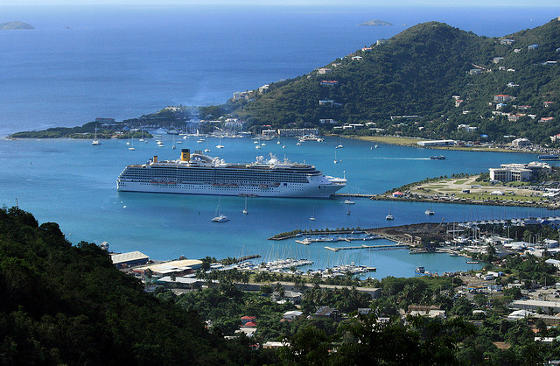
A closed-loop cruise begins and ends at the same U.S. port. On many qualifying cruises within the Western Hemisphere, an adult U.S. citizen may return to the United States using a government-issued photo ID and proof of U.S. citizenship, such as an original or certified birth certificate.
That does not guarantee that every passenger can board every cruise without a passport. The cruise line may require one, and a destination on the itinerary may have its own entry rules. Some circumstances, including certain one-way itineraries, foreign embarkation ports, and trips outside the closed-loop rules, require a passport.
A passport book provides an emergency return option.
If you miss the ship, become ill, or need to fly home from a foreign port, a birth certificate and driver’s license will not replace the passport book required for international air travel.
Review our closed-loop cruise passport guide and broader cruise passport requirements before booking.
Canada and Mexico Are Not Truly Passport-Free
U.S. citizens may not always need a passport book to enter or return from Canada or Mexico by land or sea, but adults still need an approved Western Hemisphere Travel Initiative document.
Depending on the route and traveler, acceptable documents may include:
- A U.S. passport book.
- A U.S. passport card.
- An Enhanced Driver’s License issued by a participating state.
- A qualifying trusted traveler card.
A standard driver’s license is not a substitute for these border documents. Review the specific guides for Canada and Mexico.
For travel by air, the answer is simpler: a U.S. passport book is required. A passport card cannot be used for an international flight.
Trips That Still Require a Passport
U.S. citizens need a passport book for international air travel. A passport is also required for destinations that are sometimes confused with U.S. territories, including:
- The British Virgin Islands.
- The Federated States of Micronesia.
- The Republic of the Marshall Islands.
- The Republic of Palau.
- Foreign Caribbean islands that are not U.S. territories.
Visa-free entry and passport-free travel are not the same thing. A country may allow U.S. citizens to visit without a visa while still requiring a valid passport.
Why Carrying a Passport May Still Be the Better Choice
Even when a passport is not strictly required, it may be the most useful document to carry.
- A passport book gives you more options if a cruise or domestic itinerary changes unexpectedly.
- A passport can serve as TSA-accepted identification for domestic flights.
- A passport book allows international air travel; a passport card does not.
- A passport may simplify check-in when employees are unfamiliar with less common document combinations.
- A valid passport makes it easier to respond to an emergency that requires crossing an international border.
Travelers who only need domestic-flight identification or land and sea travel within the passport card’s limited range can compare the passport book and passport card.
Do not rely on a passport-free exception unless your complete itinerary qualifies. If international travel is approaching, review the official urgent passport options. A private courier may also be worth considering if you qualify for urgent service and cannot manage the agency process yourself.
Passport-Free Travel FAQs
No. Hawaii is a U.S. state. Adults flying there from another U.S. location need a REAL ID-compliant license or another form of identification accepted by TSA, but they do not need a passport.
No. Direct travel between the mainland United States and Puerto Rico is domestic travel for U.S. citizens. Adults flying still need identification accepted by TSA.
No. U.S. citizens traveling directly from the United States or Puerto Rico do not need a passport for St. Thomas, St. John, or St. Croix. A passport is required for the nearby British Virgin Islands.
No passport is required for direct travel between the United States and Guam. A foreign connection or stop can require a passport, so check the full itinerary.
A U.S. citizen may enter with a valid passport or a certified U.S. birth certificate. Verify current airline and American Samoa entry requirements before traveling.
In many cases, an adult U.S. citizen can return from a qualifying closed-loop cruise with a government-issued photo ID and proof of citizenship, such as a certified birth certificate. The cruise line and ports of call may still require a passport.
No. A valid U.S. passport book is required for international air travel. A passport card is not valid for international flights.
Last reviewed: July 2026
Our role: U.S. Passport Service Guide explains the published travel-document rules and helps travelers identify which documents fit their route. Airlines, cruise lines, border officials, and destination authorities make the final decision about whether a traveler’s documents are acceptable.