The Trans-Siberian Railroad stretches almost 6,000 miles from Moscow to Vladivostok. It is an adventurous journey through Poland, Belarus, Russia, and Mongolia. Depending on the route you choose, you can visit cities like Minsk, Saint Petersburg, Moscow, Novosibirsk, Irkutsk, Ulan Bator, and Beijing.
Visa Requirements for the Trans-Siberian Railroad
If you wish to take the Trans-Siberian railway from Beijing to Europe, you must obtain visas for China, Mongolia, Russia and possibly other countries, too, depending upon how you plan to reach your boarding point. Plan ahead! Getting these travel documents lined up can take a month or longer depending upon yhe season and world events.
Making things more complicated, you must navigate the beurocracies of multiple countries simultaneously to acquire the proper travel documents. A single hiccup could derail your whole trip. For instance, the Mongolian Consulate in Beijing is only open a few hours per week. If you plan of getting your visa in person, missing your opportunity to submit your application could mean costly delays and stressful rescheduling.
For this reason, enlisting the help of a visa expediting service and/or a reputable travel agency can help you plan and enjoy the perfect railway adventure on the Trans-Siberien Railroad.
Whether you plan your own adventure or use some professional help, be sure to consult our guides to the entry requirements for both Russia and China as part of your planning process.
In a hurry? Apply online for expedited visa service
The Four Trans-Siberian Railway Routes
There are four popular routes for tourists seeking to enjoy the Trans-Siberian Railroad. They all have varying lengths and come with different costs - partly influenced by the number of travel visas you will need to procure.
The Trans-Siberian Route
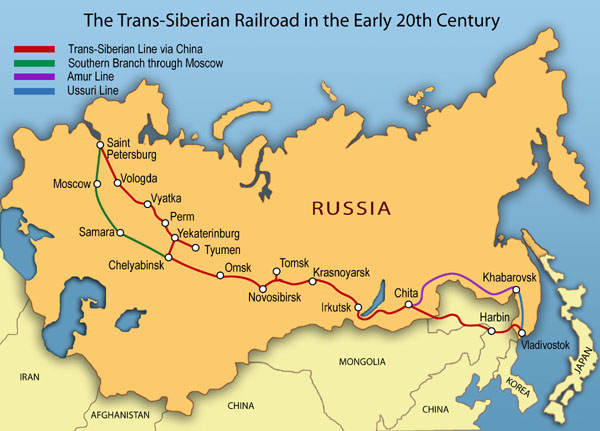
The Trans-Siberian route begins in Moscow and ends in Vladivostok. This route passes through Yaroslavl on the Volga, Exaterinburg in the Urals, Irkutsk near Lake Baikal's southern extremity, and then Khabarovsk. From Vladivostok you can continue by ferry to Niigata on the west coast of Japan.
The Trans-Manchurian Line
A second route is the Trans-Manchurian line. This route follows the Trans-Siberian line until Tarskaya. From Tarskaya the Trans-Manchurian heads southeast into China and makes its way down to Beijing.
The Trans-Mongolian Line
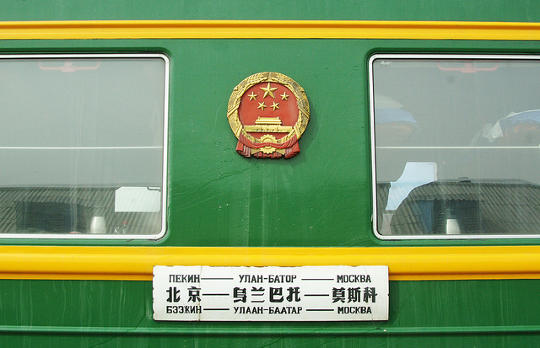
Another route is the Trans-Mongolian line. This route follows the Trans-Siberian as far as Ulan Ude. From Ulan-Ude the Trans- Mongolian heads south to Ulaan-Baatar before making its way southeast to Beijing.
Trans Mongolian Express
From the Great Wall of China to the Hermitage in St Petersburg, travel halfway around the world in three incredible weeks. Board one of the worlds great trains and ride the rails on this once-in-a-lifetime trip across the grassy steppes of Mongolia and through the taiga forests of Siberia. Share train carriages with locals, overnight in Mongolian ger tents and in cozy Russian homestays. Not only does this trip provide the perfect blend of comfortable accommodations and plenty of activities but also free time to explore this fascinating region at your own pace.
Finally, there is the Baikal Amur Mainline. This route departs from the Trans-Siberian line several hundred miles west of Lake Baikal and passes the lake at its northernmost extremity. It reaches the Pacific to the northeast of Khabarovsk, at Imperatorskaya Gavan. While this route provides access to Baikal's stunning northern coast, it also passes through some pretty foreboding terrain.
For more information, consult the Trans-Siberian
Handbook by Bryn Thomas . Selling over 90,000 copies, this is one of the most comprehensive and helpful guides to Trans-Siberian Railroad travel you will ever find.
History of the Trans-Siberian Railroad
In the second half of the nineteenth century, Russia underwent a period of extensive rail development that culminated in the construction of the Trans-Siberian Railroad. Akin to the great railways to the Pacific in both the United States and Canada, Russia's transcontinental line was intended to supply and populate Siberia as well as deliver raw materials to the burgeoning industries west of the Urals.
 In the second half of the nineteenth century, Russia
underwent a period of extensive rail development that culminated in the
construction of the Trans-Siberian Railroad. Akin to the great railways
to the Pacific in both the United States and Canada, Russia's
transcontinental line was intended to supply and populate Siberia as
well as deliver raw materials to the burgeoning industries west of the
Urals.
In the second half of the nineteenth century, Russia
underwent a period of extensive rail development that culminated in the
construction of the Trans-Siberian Railroad. Akin to the great railways
to the Pacific in both the United States and Canada, Russia's
transcontinental line was intended to supply and populate Siberia as
well as deliver raw materials to the burgeoning industries west of the
Urals.
Working against an ambitious timetable and under severe conditions of climate and terrain, the Russians effectively united the European and Asian parts of the empire by completing this herculean project.
Plans to build a railway across Siberia had circulated within the highest levels of the Russian bureaucracy for years before construction finally began in 1891. The project had strong backing from Emperor Aleksandr III and other notables.
The heir apparent, Grand Duke Nicholas, served as chairman of the Siberian Railroad Committee and performed a variety of ceremonial duties connected with the project, including turning the first spadeful of earth near Vladivostok to start the construction. The real force behind the project, however, was Sergei Witte, the indomitable minister of finance to both Aleksandr and later Nicholas.
In order to begin rail operations on parts of the line as soon as possible, Witte set firm deadlines for the completion of various sections of the project. With the schedule under constant threat of slippage from the difficult working conditions and remoteness of Siberia, Witte insisted on adhering to his plans and cajoled subordinates to maintain the pace.
This pressure contributed to accidents, as well as supply and equipment breakdowns. As disease and exposure took their toll on the labor force, the state turned to prisoners in great numbers to finish the job.
The costs of construction eventually reached over $250 million - twice the original estimate. Witte remained resolute in his goal, however, recalling in his memoirs, "I devoted myself body and soul to the task."
Like other rail lines throughout the empire, the track used on the Trans-Siberian was wider than the standard European gauge 5 feet 3.5 inches as opposed to 4 feet 8.5 inches. The engineering plans provided for the sequential construction of six basic segments. In order of completion, these branches were:
- the West Siberian line from Cheliabinsk to Novonikolaevsk (the future city of Novosibirsk) on the Ob River;
- the Ussuri line from Khabarovsk to Vladivostok;
- the mid-Siberian line from Novonikolaevsk to Innokentievskaia near Irkutsk, with a spur line to Tomsk;
- the circum-Baikal line from Irkutsk to the eastern side of Lake Baikal;
- and the trans-Baikal line from Lake Baikal to Sretensk.
- A sixth section, the Amur line from Sretensk to Khabarovsk, was not completed until 1916.
Before its completion, Russia was able to establish a link to the Pacific by negotiating an agreement with China to run track across Manchuria via the Chinese Eastern Railway.
Trans-Siberian Railroad Timeline
| 1882 | Volunteer Fleet Co. begins steamship service to the Russian Far East. |
| May 19, 1891 | Tsarevich Nicholas lays first stone of railway in Vladivostok. |
| October 1896 | Ekaterinburg-Cheliabinsk branch and West Siberian line (Cheliabinsk to Ob River) open. |
| 1897 | Ussuri line (Vladivostok to Khabarovsk) opens. |
| 1898 | Special migrant fare established. |
| 1898 | Mid-Siberian line (Ob River to Innokentievskaia, near Irkutsk) and branch line to Tomsk open. |
| 1899 | Irkutsk-Baikal line opens. |
| 1900 | Trans-Baikal line opens. |
| 1904 | Completion of Trans-Siberian Railroad. |