

Prepare for a Safe Trip to China
A little planning and knowledge will go a long way toward making your trip to the People's Republic of China go smoothly. Learning more about China and obeying the laws and respecting the customs will make your stay as pleasant and incident-free as possible.
Start by ensuring you have the proper passport and visa for your visit. Check the State Department website for any active travel warnings or travel advisories. While you are there, be sure to take note of key information like the nearest U.S. consulate to your destination, available English-speking medical facilities, and any limitations on what can be carried either in or out of China.
That takes care of the basics, but there's a lot more to a smooth, safe trip to China.
Passport Requirements
All American travelers require a passport to travel internationally. That said, even a valid passport could be rejected if it doesn't meet China's specific criteria. China is one of the countries that requires visitors to have at least six months of validity remaining on their passport before entering. China also requires each visiting traveler to have a minimum of two blank pages remaining in their pasport book.
Visas are also required for both entry and exit. For more, check out our full guide to China's travel requirements here.
In a hurry? Apply online for expedited visa serviceChina Travel Tips - Back to Top
Registration
All American citizens visiting China for a month or more are encouraged to register with the U.S. Embassy in Beijing or the nearest U.S. consulate. Registration will assist posts in China in locating you in the event of an emergency at home or in replacing a lost or stolen passport.
Once you are committed to traveling to China, you should sign up for the U.S. Department of State's Smart Traveler Enrollment Program (STEP) program. This totally free service will provide you with the latest travel advisories as well as serve as a critical method of contact for resolving passport emergencies abroad, initiating an emergency evacuation, or receiving urgent information from home.
China Travel Tips - Back to Top
Restricted Areas in China
Visitors to China should be aware that Chinese regulations strictly prohibit travel in “closed” areas without special permission. However, over 1,200 cities and areas in China are open to visitors without special travel permits, including most major scenic and historical sites. If you need to know if an area is open to travel without a permit, seek advice from the nearest Chinese embassy or consulate, or, if you are already in China, from the U.S. Embassy in Beijing, the nearest U.S. consulate, or the local Chinese public security bureau.
China Travel Tips - Back to Top
China's Currency Regulations
Chinese currency is called yuan or, more commonly, renminbi (RMB). Foreign currency (cash or traveler’s checks) may be exchanged for Chinese currency at licensed exchange facilities of the Bank of China and other authorized banks.Money exchange facilities are available at major airports, hotels, and department stores. Major brands of traveler’s checks are accepted at such exchange facilities and cash advances against a credit card can be arranged, a service charge is usually added. Consult with your bank before departing the United States to be sure that your brand of check or credit card will be accepted. Major credit cards (American Express, Mastercard and Visa) are accepted by most major hotels and in many well-known restaurants. ATMs compatible with US bank cards are also available throughout Hong Kong and to a limited extent in major Mainland cities such as Shanghai and Beijing.
China Travel Tips - Back to Top
Customs Regulations for China
Items such as watches,
radios, cameras, and calculators imported duty free for personal use may
not be transferred or sold to others. Gifts and articles carried on behalf
of others must be declared to the customs inspector and are subject to
duty.
Chinese customs regulations prohibit the import or export of the following
items:
- arms, ammunition, and explosives
- radio transmitter-receivers and principal parts
- Chinese currency (renminbi)
- books, films, records, tapes, etc. which are “detrimental to China’s politics, economy, culture, and ethics”
- poisonous drugs and narcotics
- infected animal or plant products
- infected foodstuffs.
- valuable cultural relics and rare books relating to Chinese history, culture, and art
- rare animals, rare plants and their seeds
- precious metals and diamonds and articles made from them.
Information concerning regulations and procedures governing items that may be brought into China is available through the Chinese Embassy and Consulates in the United States.
China Travel Tips - Back to Top
Crime in China
China has a low crime rate; however crime has increased in the past few years, principally in the major cities. U.S. citizens and other foreigners have seldom been victims of violent crime.
However, whenever you travel internationally - wherever your destination - there are many required considerations and precautions to ensure your safety abroad. For more, see our complete guide to international travel safety.
China Travel Tips - Back to Top
Legal Matters for Travel to China
Remember: while in China, you are subject to Chinese laws and regulations. Laws in China sometimes differ significantly from those in the United States and do not afford the protections available to the individual under U.S. law. Please exercise caution and carefully obey local laws. Penalties for breaking the law can be more severe than in the United States for similar offenses. Persons violating the law, even unknowingly, may be expelled, arrested or imprisoned. Chinese laws prohibit public demonstrations without a valid permit obtained from the Chinese Public Security Bureau in the city where the demonstration is planned. Chinese authorities have seized documents, literature, and letters which they deem to be pornographic or political in nature or those which are intended for religious proselytizing. If you seek to enter China with religious materials in a quantity greater than what is considered needed for personal use, you could be detained and fined. Religious proselytizing or passing out of religious materials is strictly forbidden. Americans suspected of engaging in such activities have been fined, arrested or deported. Magazines with photographs considered commonplace in Western countries, including some advertisements, may be regarded as pornography. Books, films, records, tapes, etc., which are “detrimental to China’s politics, economy, culture, and ethics” will be seized by Chinese Customs to determine that they do not violate these prohibitions. Foreign visitors and residents in China have sometimes been detained and heavily fined for having improper sexual relations with Chinese citizens. In most of these cases, the foreigners involved had invited Chinese citizens to their hotel rooms. Any U.S. citizen who is detained by Chinese authorities for questioning regarding this or any other violation of Chinese law or regulations should notify the U.S. Embassy or nearest U.S. consulate as soon as possible.Criminal penalties for possession, use, or trafficking of illegal drugs in China are strict. Convicted offenders may receive severe jail sentences and fines.
China Travel Tips - Back to Top
Consular Access in China
Under the U.S. -P.R.C. Consular Convention of 1980, U.S. consular officers shall be notified if a U.S. citizen is arrested or detained no later than four days after the arrest or detention. Under the Convention, U.S. consular officers must be informed upon request of the reasons for the arrest or detention and have a right to visit the citizen after a formal request is made by the consular officer. U.S. consular officers cannot serve as attorneys or give legal advice. They can, however, provide a list of local English speaking attorneys you may retain and help you find legal representation.U.S. citizens have rights to consular access under the U.S. - PRC Consular Convention and should insist upon contact with the U.S. Embassy or one of the U.S. consulates general. If you are denied this right, continue to protest.
China Travel Tips - Back to Top
Dual Nationality
China does not recognize dual nationality. If you are a citizen of both China and the U.S., you may experience difficulty entering and departing China on your U.S. passports. In some cases, U.S. passports have been seized by Chinese authorities. Dual nationals may be subject to Chinese laws which impose special obligations. Such persons are often required to use Chinese documentation to enter China. The United States requires that all U.S. citizens enter and depart the United States on U.S. passports. Dual nationals who enter and depart China using a U.S. passport and a valid PRC visa retain the right of U.S. consular access and protection under the U.S.-PRC Consular Convention. The ability of the U.S. Embassy or consulates general to provide normal consular services would be extremely limited should a dual national enter China on a Chinese or other passport. China does not recognize the U.S. citizenship of children born in China, when one of the parents is a PRC national. Such children are required to depart China on PRC travel documents. Children born in the United States to PRC national parents, who are neither lawful permanent residents nor U.S. citizens, are not recognized as U.S. citizens under Chinese nationality law. Although Chinese consulates have frequently issued visas to such individuals in error, they are treated solely as PRC nationals by Chinese authorities when in China.Before traveling to China, dual nationals should contact the Office of Overseas Citizens Services at (202) 647-6769 or the U.S. Embassy in Beijing for additional information.
China Travel Tips - Back to Top
Passport Confiscation and Business Disputes
If you are planning to conduct business in China, please be vigilant in investigating the companies you plan to work with to ensure they are reputable or to learn whether a prior history of disputes exists.The confiscation of foreign passports of persons involved in business disputes has increased in China in recent years, frequently resulting in individuals being placed under house arrest or being unable to leave China until the dispute is satisfactorily resolved. As a valid Chinese visa is required in order to depart China, obtaining a replacement for a confiscated U.S. passport will not facilitate exiting the PRC and the Chinese government will block your departure.
China Travel Tips - Back to Top
Health Issues for Travel to China
Tourist travel in
China can be extremely strenuous and may be especially debilitating to
someone in poor health. Tours often involve walking long distances and
up steep hills. All, especially those with a history of coronary/pulmonary
problems, should have a complete medical checkup before making final travel
plans. It is very important to schedule rest periods during your touring
activities.
China discourages travel by persons who are ill, pregnant, or are of advanced age. Visa applicants over 60 are sometimes required to complete a health questionnaire. If medical problems exist, a letter from your physician in the United States explaining treatment and, if relevant, copies of your most recent electrocardiograms, would be helpful in case a medical emergency occurs in China.
China lacks handicapped-accessible facilities. Even travel to popular destinations such as the Great Wall and the Forbidden City can present problems to persons with disabilities. If you require such facilities, you may want to discuss this with your travel agent or host well in advance of your proposed travel. Air pollution in the large cities is severe, particularly in winter, and respiratory ailments are common. Be aware that HIV has become a significant concern in China. You should always ask doctors and dentists to use sterilized equipment and be prepared to pay for new syringe needles in hospitals or clinics. Do not to drink tap water in China. Hotels almost always supply boiled water that is safe to drink. Buy bottled water and/or carbonated drinks. Make sure you carry water purification tablets to use when neither boiled water nor bottled drinks are available. If you are planning to rent an apartment with gas appliances while in China, be aware that in some areas natural gas is not scented to warn occupants of gas leaks or concentrations. Also, heaters may not always be well vented, thereby allowing excess carbon monoxide to build up in living spaces. There have been fatal accidents involving American citizens, so make sure all gas appliances are properly vented or install gas and carbon monoxide detectors in your residence. These devices are not widely available in China, and they should be purchased prior to arrival.You can obtain information on vaccinations and other health precautions for travelers in the United States from local health departments, private doctors, travel clinics, and the Centers for Disease Control & Prevention at 1-877-FYI-TRIP (1-877-394-8747); fax 1-888-CDC-FAXX (1-888-232-3299), or via the CDC’s website at http://www.cdc.gov.
China Travel Tips - Back to Top
Medical Facilities in China
You can select hospitals in major Chinese cities that have so-called VIP wards (gaogan bingfang). These wards feature reasonably up-to-date medical technology and physicians who are both knowledgeable and skilled. Most of these VIP wards also provide medical services to foreigners, feature English-speaking doctors and nurses, and may even accept credit cards for payment. Even in the VIP/Foreigner wards of major hospitals, however, American patients have frequently encountered difficulty due to cultural and regulatory differences. Physicians and hospitals have sometimes refused to supply American patients with complete copies of their Chinese hospital medical records, including laboratory test results, scans, and x-rays. Physicians have also frequently discouraged Americans from obtaining second opinions from outside physicians. Hospitals have sometimes been reluctant to release patients for medical evacuation in cases where they would prefer to keep the patient for an extended stay. Ambulances do not carry sophisticated medical equipment, and ambulance personnel generally have little or no medical training. Therefore, injured or seriously ill Americans should take taxis or other immediately available vehicles to the nearest major hospital rather than waiting for ambulances to arrive.In rural areas, only
rudimentary medical facilities are generally available. Medical personnel
in rural areas are often poorly trained and are often reluctant to accept
responsibility for treating foreigners, even in emergency situations.
Foreign-operated medical providers catering to expatriates and visitors are available, though their services are usually considerably more expensive than hospitals and clinics operated by local government health authorities.
SOS International, Ltd., operates clinics and provides medical evacuation and medical escort services in several Chinese cities. For medical emergencies anywhere in mainland China, Americans can call the SOS International, Ltd., 24-hour “Alarm Center” in Beijing at (86-10) 64629100 or in Shanghai at (86-21) 62950099 for advice and referrals to local facilities. SOS International Alarm Centers can also be contacted in Hong Kong at (852) 24289900 and in the United States at (1-800) 523-6586.
Additional information on medical providers specializing in treating foreigners, including dental and orthodontic clinics, is available on the U.S. Embassy's web page.
China Travel Tips - Back to Top
Medical Insurance
Americans are advised to travel to China with both health insurance and medical evacuation insurance (often included in so-called “travel” insurance and provided as part of a tour group package).U.S. medical insurance is not always valid outside the United States. Even when insurance does cover services received in China, it will usually be necessary to pay first and then file for reimbursement with the insurance company upon returning to the United States. Supplemental insurance with specific overseas coverage, including provision for medical evacuation, is strongly recommended and can be purchased in the United States prior to travel. Some insurance policies also include coverage for psychiatric treatment and for disposition of remains in the event of death. Recent medical evacuations by air ambulance from China to nearby areas have cost over US $50,000. Most standard U.S. medical insurance policies do not cover the cost of such medical evacuations.
Click here for FREE Quotes on Travel Health Insurance.
China Travel Tips - Back to Top
Areas of Interest in China
Modern tourist facilities are available in major cities in China. China is full of natural and man-made wonders. Its great rivers include the Yellow and the Yangtze. Hong Kong SAR is cosmopolitan and highly developed, and a popular destination. Macau SAR has well developed tourism facilities. Gambling and tourism are some of the major factors in Macau's economy.There are also many mountain ranges including the Himalayas along the southern border of Tibet and the Kunlun Mountains stretching east and west along Tibet's northern edge. Part of the Gobi desert is located in China's Inner Mongolia.
China Travel Tips - Back to Top
Travel Arrangements Within China
Package tours, while often more expensive than self arranged travel, will insulate you from the difficulties of booking travel by air, rail, bus or car in China. Transportation systems have not expanded as fast as the number of Chinese and international travelers has increased. Planes and trains are often overbooked. Tickets or reservations for onward travel should be reconfirmed at each stop. Hotels, for a fee, will assist in making reservations and purchasing tickets.Train travel can be difficult to reserve, even for the experienced traveler. Round trip rail tickets are not generally available without the services of a travel agency. Beware of counterfeit train tickets. Unethical entrepreneurs manufacture and sell such tickets at railway stations.
China Travel Tips - Back to Top
Top 10 Tourist Attractions in China
China's vast area, comparable to the area of the United States, borders 14 countries and four seas. Known formally as the People's Republic of China, it has a 4000-year-old heritage that reads like a best-selling historical novel and stands as a testament to its enduring will. Modern China is in many ways a complex mix of past and future; its traditions, natural beauty, and economic and cultural resurgence has made it a popular international tourist destination. Here is a small sampling of must-see tourist attractions in China.Chengdu Giant Pandas

Yangtze River Cruise

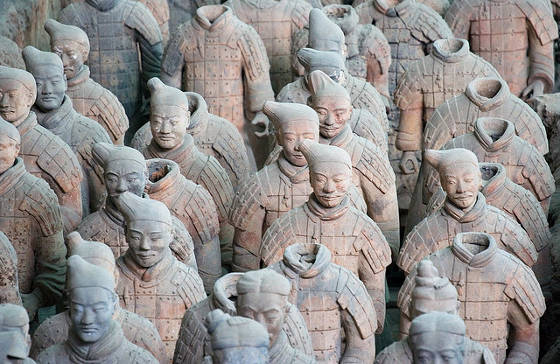
Xian Terracotta Warriors
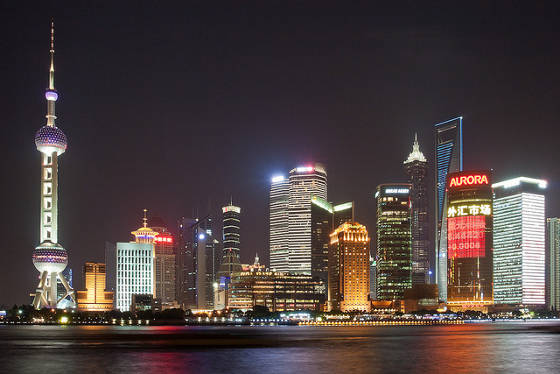
Best of Shanghai
Great Wall of China

Yuanyang Rice Terraces

Huangguoshu Waterfall National Park

Leshan Giant Buddha

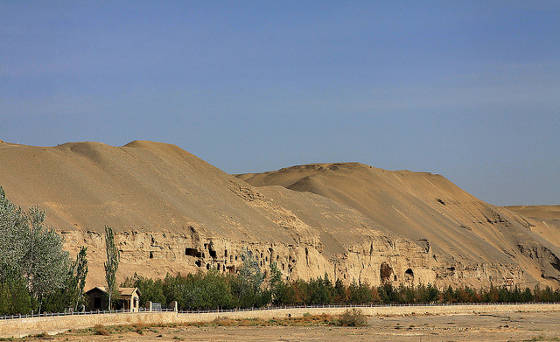
The Caves of the Thousand Buddhas
Beijing Zoo and Aquarium

These are just a few of the magnificent destinations China has to offer. Before you go, you will need to make sure your passport is valid a minimum of six months beyond your visit, and you must obtain a tourist visa from the Chinese embassy in the U.S. If you are traveling to Tibet, you also need to get a Tibet Travel Permit to visit Lhasa. To travel around Tibet and explore all it has to offer, you must be with a group tour and get an Alien's Travel Permit. If your tour goes into any militarily sensitive areas, you will also need a Military Area Entry Permit. Your Chinese travel agency can arrange all the travel permits necessary for your trip. Keep in mind that areas of Tibet may be closed to tourists by the Chinese government with little notice.
China Travel Tips - Back to Top
China's Festivals and National Holidays
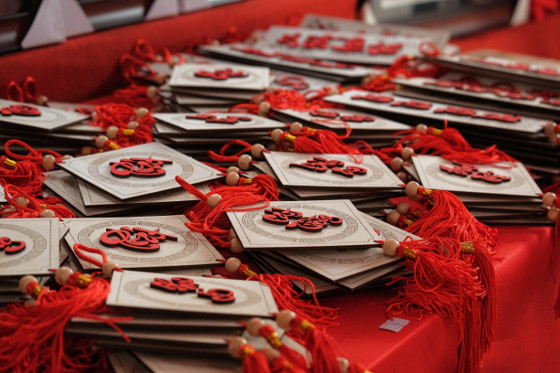
China currently has 7 official national holidays. There were major changes made to Chinese public holidays in 2008. The Labor Day golden week was abandoned and replaced by the three new holidays named Qingming festival, Duanwu festival and Mid-Autumn festival. A characteristic of Chinese holidays is that holidays that fall on a weekend are usually swapped with the closest weekday so that there can be a longer period of celebration. Like all other country's national holidays, those of the Chinese often represent their unique culture and heritage. It's good to be aware of these holidays if you plan to travel to China so that you can plan appropriately.
New Year's Day (1 Jan)
This is the start of a new Gregorian calendar and is a day for reflection and relaxation in China. However, keep in mind that this is not a particularly festive time of the year as it is in the western world since the Chinese celebrate New Year according to their own lunar calendar.
Chinese New Year
Qingming Festival
This festival falls on the fifth solar term of the Chinese lunar calendar and generally takes place on either the 4th or 5th of April on the Gregorian calendar. This is a day to remember and honor ancestors at grave sites. Tombs are swept and gifts are offered to these ancestors in the form of tea, food, wine and more. Willow branches are sometimes carried or put up outside homes to fend off the evil spirit wanderer of Qingming. During Qingming, people also go on outings with their families, sing, dance and enjoy the outdoors. Couples begin to court and traditionally kites are flown in the shape of characters from the Chinese opera.Labor Day (1 May)
Labor Day was initially a three-day holiday in China; however, it was reduced to a one-day holiday in 2008. Like other countries, Labor Day in China celebrates the work of the general labor movement.Dragon Boat Festival
Mid-Autumn Festival
Known also as the moon and lantern festival, this holiday is held during a full moon on the fifteenth day of the eighth month in the Chinese calendar (generally September or early October). This is a day to gather families and/or crops, give thanks for unions/harvests and praying for babies, a spouse, longevity, beauty and other similar things.National Day (1 Oct)
This day celebrates China's day of independence. Government-organized events such as concerts and massive firework shows are hallmarks of the celebration on this day. Places of public significance are decorated and portraits of past leaders are displayed.
China Travel Tips - Back to Top
In a hurry? Apply online for expedited visa service
